Bioblogia.net : avian behaviour

Guías y recursos para arrancar tu carrera como biólogo

Cómo mejorar tu suerte y conseguir más oportunidades

¿Buscas trabajo en conservación? Deja que te ayude

Mi experiencia como biologo de la conservación

Apúntate a nuestra lista de correo y recibe ofertas en tu email

Mostrando entradas con la etiqueta avian behaviour. Mostrar todas las entradas

22 de abril de 2025

Voluntariado como asistente de campo con arrendajo siberiano — 2 meses en Suecia con gastos pagados

Oferta compartida por Cristina

Fieldwork Assistant – Social Learning in Siberian Jays
Location: Arvidsjaur, Swedish Lapland

We are recruiting a fieldwork assistant to help run a social learning project in Siberian Jays (Perisoreus infaustus) during September–October 2025. Siberian Jays are territorial, group-living corvids. The assistant will support a field-based cognition experiment investigating whether juvenile birds learn how to solve a two-action puzzle from adults in their group.

You will primarily work with PhD student Alex Chan (University of Konstanz, Germany), under the supervision of Dr. Fumihiro Kano (University of Konstanz). The field site is managed by Dr. Michael Griesser (University of Konstanz) and Dr. Miya Warrington (Oxford Brookes University, UK).


Responsibilities:

Key tasks include:

  • Running cognition experiments in the wild

  • Operating cameras, microphones, and field equipment

  • Observing animal behavior and narrating during experiments

Requirements:

  • Valid driver’s license and confident driving skills

  • Available for the full ~8-week period (exact dates negotiable)

  • Fluent in English

  • No color blindness (color ring reading required)

  • Good physical health

  • Strong interpersonal skills

Desired skills:

  • Interest in animal cognition, social learning, and field experiments

  • Enthusiastic about spending two months in the forest in Swedish Lapland

How to apply:
Send a CV, a brief cover letter in the body of the email, and contact details of two referees to Alex Chan at:
hoi-hang.chan@uni-konstanz.de

Feel free to reach out to Alex with any questions.

Application deadline: May 31, 2025

Additional details:

  • Travel costs to and from Arvidsjaur covered

  • Rent and all food/consumables during the stay are provided

  • Duration: ~8 weeks (September–October 2025)

  • Language required: English


23 de octubre de 2024

Explora por qué algunas especies de aves son más propensas a chocar con estructuras humanas con esta beca de doctorado en UK

The Edward Grey Institute at the University of Oxford announces a fully funded DPhil scholarship focused on understanding why certain bird species are more prone to collisions with human-made structures, while others tend to avoid them.


This exciting project, supervised by Prof. Steve Portugal, will take a two-pronged approach:

1. Analyzing the visual fields of various bird species, searching for common traits between those that frequently collide with objects and those that do not

2. Working with 3-4 social bird species in captivity to explore the role of flock mates in visual attention and collision risk


The research will utilize:

- State-of-the-art custom-built flight arena

- Camera tracking and eye-tracking technology

- Zoological collections

- Fieldwork opportunities

- Phylogenetically informed analyses


Key Details:

- Start Date: 1 October 2025

- Duration: 3.5 years (possible extension to 4 years)

- Stipend: £19,237 (2024-25 rate)

- Research Expenses: Up to £5,000 per year

- Location: Department of Biology, University of Oxford

- Co-supervision: Prof. Graham Taylor


The project offers valuable opportunities to acquire both practical and analytical skills, with flexibility for the student to contribute their own ideas.


More information about this and other scholarships can be found here: https://www.dropbox.com/scl/fi/2zymo46wrav8pz4ekbj65/EGI-Scholarships-for-2025.docx?rlkey=7bzq13cizuo9djr2delvl4xjo&e=1&st=nwlam35m&dl=0

4 de enero de 2024

Voluntariado con trabajo de campo en China estudiando el comportamiento de paseriformes - gastos pagados excepto llegada a China

Oferta compartida por Cristina


We are looking for volunteer field assistants for our study of avian behavioral ecology in central China. 

The volunteers are expected to assist in two projects: (1) Black-throated and Silver-throated tit project, which will be focusing on the two species’ cooperative breeding behavior and incubation behaviour; and 2) Japanese tit (a previous subspecies of Great tit) project, which will be focusing on how behavioral laterality (specifically, footedness) is associated with individual personality, vocal behavior and reproduction.


The volunteers will be working with a crew of 6-10 people, including students and other volunteers in an area nearby Dongzhai National Nature Reserve. Duties of both projects include identifying color-ring-banded individuals, searching for and checking nests, mist-netting and trapping birds, observing behaviors, conducting experiments, watching videos and data entry, etc.

Volunteers will have opportunities to learn field skills of ornithological and behavioral research and experience Chinese tradition and culture. As the study site is located at the outskirt of the Dongzhai National Nature Reserve, a well-known birding spot in the Henan province of China, the volunteers will also have opportunities to see many Chinese bird species such as crested ibis, Reeves’s pheasant, white-throated kingfisher, blue-throated bee-eater and amur paradise-flycatcher.

The start of the Black-throated and Silver-throated tit project will be at mid-February and will last until mid-May, and the Japanese tit project will be in early March and will last until the end of July. Volunteers can be joining either of the two projects at any time and can consider to switch from the first project to the second project in mid-May. The volunteers with a minimum stay of two or more months are preferred.

The projects will cover all work-related expenses during the volunteering period (i.e. housing, food, and traffic costs, etc.), but there is no salary, and the volunteers are responsible for their travel to and from China.

Qualifications:

1. Strong interest in wildlife research, especially in birds and animal behaviors;

2. Previous experience in biology, ecology or a related field is preferred, but not essential (basic training, such as mist-netting and behavioral observation, will be provided);

3. Be physically fit for field work and willing to work for long and irregular time in the field;

4. Be used to Chinese diet and be willing to share rooms with other crew members;

Some more information can be found at: http://www.luckytit.cn

To apply:

Please contact Dr. Jianqiang Li AT luckytit@163.com. The application should include: (1) a short resume or CV, (2) the dates you will be available for the projects, and (3) the names and contact information of at least two references.

12 de junio de 2023

Busca nidos, anilla y estudia las poblaciones de cuclillo broncíneo en Nueva Caledonia durante 3 meses

 Oferta compartida por Cristina


Field assistants – Avian behavioural ecology New Caledonia

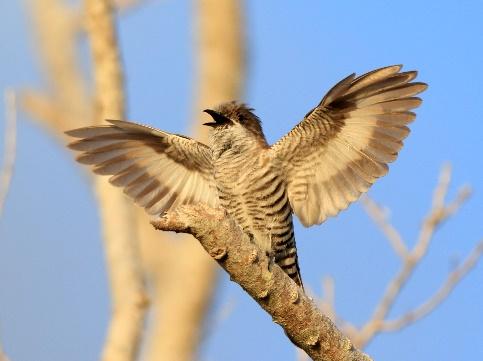
We are looking for 2-3 field assistants to work on avian behavioural ecology in New Caledonia. The research is part of a long-term study on the co-evolutionary arms race between the Fan-tailed Gerygone and the Shining Bronze-cuckoo conducted by the Behavioural Ecology Group at the Museum and Institute of Zoology of the Polish Academy of Sciences (for more info see Attisano et al, 2018 SciRep 8:10359; Attisano et al., 2021, CurrZool, 67:653-663; Attisano et al., 2023, JAnimEcol, 92:30-43). Postgraduate students are particularly encouraged to apply as there are possibilities to develop research projects on co-evolutionary arms race, spatial ecology, avian breeding ecology and vocal repertoire and communication.
When: up to 2-3 months between October - December 2023, exact dates and duration to be agreed.
Where: main island of Grande Terre, in managed nature reserve with tropical savannah and dry forest habitats.

Duties: nest searching and monitoring, mist-netting and banding, data collection and  analysis, maintenance of field equipment.

Requisites: experience of behavioural research with wild birds in particular nest searching, nest monitoring, mist-netting, bird banding and use of photo traps. Additional training will be provided. Fieldwork is physically demanding (UV exposure, heat, humidity, rain) therefore physical fitness, enthusiasm and self-motivation are essential. Ability to work independently or as part of a team and to share living spaces is also essential. Previous experience of working in the tropics, driving license and knowledge of French are desirable.

Working conditions: 8-10 hours daily for 5 days a week on average, up to 10-12 hours and 6-7 days a week during the peak of the breeding season. Early morning start. Selected applicants will need to arrange their own travel to and from New Caledonia. The project will provide free accommodation and a monthly wage to cover food costs and living expenses.

How to apply: send a single PDF named “NC2023_Assistant_NameSurname.pdf” with CV, cover letter (max 1 page) describing relevant experience and contact details of 2 referees to aattisano@miiz.waw.pl by the 18/06/2023. Prospective postgraduate candidates should also include a brief preliminary research proposal (max 1 page).

Only selected applicants will be contacted and invited for an online interview.

For informal enquiries please contact: dr Alfredo Attisano (aattisano@miiz.waw.pl).

19 de mayo de 2023

Asistente de campo para trabajar una temporada en comportamiento de aves

 Oferta compartida por Cristina


Field Assistant


Classification: ANU Officer Grade 2/3 (Technical)
Salary package: $58,422 - $69,703 per annum plus 17% superannuation
Term: Part Time, Fixed Term (up to 3 months)

Working at ANU

This is an opportunity to work with a world class University that undertakes cutting edge research and has a strong tradition in research-led teaching excellence.

We offer:Flexible working arrangements
Generous paid parental leave entitlements of up to 32 weeks. We are one of the leading employers in Australia for parental leave entitlements,
Designated parent rooms, quiet spaces and childcare facilities on campus,
Career support, training, mentoring & upskilling opportunities.

For more information on a range of lifestyle, financial and non-financial rewards and programs, please click here.

To see what the Science at ANU community is like, we invite you to follow us on social media at Instagram and Facebook.

A Diverse and Inclusive Team

ANU is introducing measures to support the recruitment, inclusion and retention of employees with disability. To find out more, please click here.

ANU is a large, diverse employer with staff working across numerous professions (see the full list of available roles here. We are a recipient of the bronze award through the Science in Australia Gender Equity (SAGE) program and a platinum member of the Australian Network on Disability. We welcome applications from people of all backgrounds and identities and from individuals who may have had a non-linear career path, career gaps or career breaks.

The Position

This is a key role in a friendly, inclusive research group that is focused on understanding the social dynamics, cognition and culture of wild birds. We do this with a combination of wild and captive work, with a focus on large-scale experiments using automated tracking and custom-built apparatus. The lab group is located at the Australian National University, however this position will be largely based remotely at the field sites in the Sutherland Shire/North Wollongong area.

This role is integral to support the aims of a research grant aimed at investigating the potential for an inter-species innovation arms race around the recently emerged bin-opening innovation in sulphur-crested cockatoos.

The Person

We are looking for people with experience in field work, preferably with wild birds. Experience with habituated animals or large birds is a bonus. Candidates should be able to work independently for long periods of time, but also willing to work in pairs and able to follow direction when needed. The person must also be willing to undertake days in the field, including early mornings and active hiking. A driver’s license and good level of physical fitness will be necessary for the fieldwork component. Opportunities to engage with research questions will be encouraged, and so the position would suit somebody who enjoys being involved in active field research on the cognitive ecology of birds.

Learn more about the ground-breaking research and world class facilities of the Research School of Biology here. Learn more about the research of the Aplin lab here.

For more information about the position please contact Dr Lucy Aplin on T: +61 2 6125 7714 or E: lucy.aplin@anu.edu.au

To Apply

To be considered for this position, please upload the following documents:A current curriculum vitae (CV), and
A statement addressing your suitability against the selection criteria (no more than 1 page).

The committee will consider candidates that do not meet one or more aspects of the selection criteria.

If shortlisted, candidates may be asked to complete a:30 minute interview, either in person or over video conferencing software.

If you require adjustments to participate in any of the above assessments, please contact our HR team at E: hr.cos@anu.edu.au or T: +61 2 6125 3360.
Any adjustment request or the disclosure of disability will not be communicated to the selection committee without the candidates consent and it will not have any bearing on hiring decisions. For examples of common reasonable adjustments, please click here.

The successful applicant must have rights to live and work in this country for the period of employment.

The successful candidate may be required to undergo a background check during the recruitment process. An offer of employment is conditional on satisfactory results.

18 de abril de 2023

Pasa unos meses en Laponia estudiando arrendajos siberianos (gastos cubiertos)

Oferta compartida por Nuria

Expenses-paid field assistant positions for a project investigating social interactions of Siberian jays in Swedish Lapland

For the period 25 July to 15 October 2023, we are looking for 2 highly motivated, expenses-paid field volunteers to assist with our field project (principal investigator Dr. Michael Griesser, University of Konstanz). The study site is located near Arvidsjaur in Swedish Lapland. An overview over our past work can be found here: https://www.youtube.com/watch?v=JaH6wjAYAiE

Our current project investigates the drivers of variation in social interactions of Siberian jays. The work of the field volunteers will be to help with catching, and colour-ringing birds, sampling blood, conducting population censuses and behavioral observations, assist in experiments and managing data. This work will provide insights into a long-term study system and will be carried out in managed and pristine boreal forests.
Please note that daytime temperatures at the end of the season can be as low as -10C. Fieldwork at times involves walking up to 15km per day.

Qualifications:
  1. Field work experience, involving behavioural observations and experiments
  2. Bird ringing and mist-netting experience
  3. Ability to work in small team and sociable personality
  4. Driver’s license (manual transmission)
  5. Fluent in English
We will cover accommodation, travel expenses from and to the study site (up to 400 euros return), as well as on-site living expenses (food).

Applications, including a CV, letter of motivation (1 page), and the name of two referees, should be sent to Michael Griesser michael.griesser@uni-konstanz.de, preferably in a single PDF.

Review of applications will start 18 May 2023, position will remain open until filled.

31 de marzo de 2023

Seguimiento de nidos, colocación de redes, extración de material biólogico: sé técnico de campo monitoreando aves durante 3 meses

Oferta compartida por Cristina

Warbler/Cowbird Field Technician

Employer: University of Illinois-Urbana-Champaign
Location: Belknap, IL
Country: United States
Last Date to Apply: 04/09/2023
Open Until Filled: Yes


We seek a field research technician for 3 months to assist with a long-term demographic, behavioral, and genetic study on the Prothonotary Warbler (Protonotaria citrea) and the obligate brood parasite the Brown-headed Cowbird (Molothrus ater) in the Cache River Watershed in southern Illinois. This technician will be employed by University of Illinois and supervised by Dr. Wendy Schelsky with opportunities for training and interaction with the Cowbird Lab, led by Dr. Mark Hauber. We look to fill this position as soon as possible.

Primary duties with this position include:
Monitoring nest boxes and nests
Mist-netting, banding, color-marking, and blood-sampling adult and nestling birds
Examining nest contents for ectoparasites
Behavioral observations of adults
Coordination of electronic surveillance equipment including cameras and rfid systems
Data entry
Coordination with graduate students and other field crew members
Opportunities exist for collaborating on research, depending on the technician's interests. This position provides significant opportunities for enhancing skills.

Expected hours and compensation:

The technician will be expected to work 20-50 hours/week with days being longer early in the season and workdays shortening towards the end of the season. Some weekend hours will be necessary. The technician will be hired as a U of I hourly research technician. Daily supervision will be by resident graduate students. Housing will be provided at a communal field house located in Belknap, IL with all rent/utilities costs covered. Food will be the responsibility of the employee. All necessary field equipment will be provided while working on the project.

Preferred qualifications:Bachelor's degree, preferred but not required
Experience handling and banding birds and ablility to read color bands
Ability to walk in water, sometimes over the knee, for extended periods
Ability to carry 30+ lbs
Ability to work long hours under challenging conditions
Good spatial awareness in natural landscapes
Ability to work independently and within a team
Ability and experience driving 4x4 vehicles on dirt roads
Attention to detail with respect to following sampling protocols and managing data
Tolerance for high heat and humidity, biting insects, snakes, and working in swamps
Good and responsive communication with supervisors and coworkers

Please contact Wendy Schelsky (schelsky@illinois.edu) by April 9, 2023 with a CV and the names and contact information for 2-3 references, or with additional questions. Preferred start date is May 1, 2023, with some flexibility. End date is early August and is negotiable.

Project synopsis:

This project is a continuation of long-term research on the Prothonotary Warbler and brood parasite, the Brown-headed Cowbird, in the Cache River watershed in southern Illinois. Since 1993, we have deployed nest boxes in 10-12 study sites throughout state and federally protected areas in the region. The warblers readily use these nest boxes as they typically nest in tree cavities. Cowbirds parasitize most warbler nests in our system so that we can study, in depth, the population dynamics and behavioral interactions between these two species. We continue to build on long-term data from color-marked warblers and cowbirds to understand their population dynamics and behavioral interactions focusing on the co-evolution between host and brood parasite.

22 de febrero de 2023

3 meses como asistente de investigación estudiando el comportamiento de avutarda hubara en Marruecos

Oferta compartida por Nuria

Reneco International Wildlife Consultants: paid short-term research assistant position in Morocco.

We are urgently seeking a short-term research assistant to help conduct behavioural testing in a captive-bred population of North African houbara bustards (Chlamydotis undulata undulata) at the Emirates Centre for Wildlife Propagation (ECWP) in Missour, Morocco. The succesful applicant will join an ongoing research project exploring links between individual behaviour, post-release movements and survival. The assistant tasks will involve behavioural testing of houbara bustards under captive conditions and possibly in the wild, to assess individual personality traits. Data entry and video analysis will also be part of required duties.

The position should start beginning of March 2023, with a duration of up to three months, depending on candidate availability. Besides a monthly salary commensurate with experience, travel expenses, onsite accommodation and food will also be covered.

Successful applicants should ideally have:
  • Completed at least three years of undergraduate studies in animal behaviour/ethology or a closely related field. Experience with field/lab research is highly desirable.
  • Experience with testing and handling of animals, preferably birds.
  • Fluency in both English and French languages.
  • Excellent organizational skills and ability to work both independently and in a team.
  • Attention to detail and ability to closely follow and implement
  • experimental protocols.
  • Data entry proficiency and, ideally, experience in video analysis
Reneco International Wildlife Consultants LLC. is a consulting company committed to the conservation breeding and translocation in the wild of threatened bird species, most notably the houbara bustard, and is active throughout North Africa, the Middle East and Central Asia. Reneco is managing the ECWP (https://www.ecwp.org/). To apply, send your CV together with a cover letter detailing your relevant experience and motivation, including contact information for two referees, all in a single PDF document to Dr Enrico Sorato: esorato@reneco.org
Review of applications will start immediately and will continue until a suitable candidate has been found.

19 de febrero de 2023

Estudia el comportamiento de aves de Nueva Caledonia: investigación centrada en biología reproductiva del cuco y su hospedador

Oferta compartida por Cristina

The role of early environment and physiology on phenotypic variation of nestlings in an avian coevolutionary arms race


We are looking for a highly motivated PhD student to join the Behavioural Ecology Group at the Museum and Institute of Zoology of the Polish Academy of Sciences in Warsaw (Poland). The student will conduct research on the environmental and physiological mechanisms determining phenotypic variation in nestlings of fan-tailed gerygone (Gerygone flavolateralis) from New Caledonia.


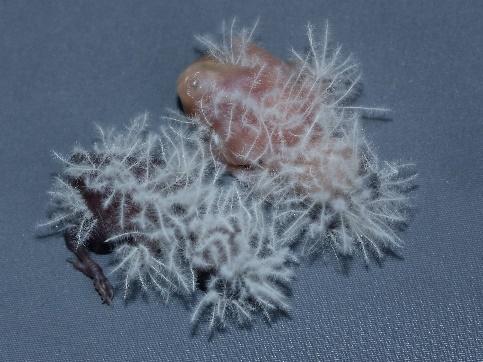
Short description: In New Caledonia the brood-parasitic shining bronze-cuckoo (Chalcites lucidus) and its exclusive host the fan-tailed gerygone have nestlings occurring in two discrete colour morphs, either pink-grey (bright) or dark-grey (dark). The cuckoo nestlings mimic the gerygone nestlings but, despite mimicry and phenotypic variation, host parents discriminate and eject the cuckoo nestling from the nest. Our research has focused on the breeding biology of host and parasite, cognitive mechanisms underlying host’s recognition of the parasite nestling and genetic basis of nestling colour. However, we still know little about the role of ecological and physiological mechanisms in determining nestling phenotypic variation.


Work description: We will conduct fieldwork in a well-established site on the main island of Grand Terre in New Caledonia for 3-4 months per year during the period September – January. The objectives of the main research project will be to investigate if the host nestling phenotype 1) depends on the mother’s condition and changes in incubation patterns, 2) depends on nest environment during incubation and 3) is associated with physiological differences in immune and stress response. Additionally, the PhD candidate will have ample possibilities to develop complementary research. Depending on the student interests, it will be possible to participate in molecular work (genetics and corticosteroid analysis).

Salary: the project is financed by the Polish National Science Center and will grant a scholarship of 5000 PLN for 4 years.

Additional info: full description of the project, candidate requirements and additional info can be found at https://www.miiz.waw.pl/en/ogloszenia/oferty-pracy

How to apply: please send 1) cover letter (max 1 page), 2) CV with contact details of 2 referees, 3) copy of the M.Sc. certificate and 4) filled application form to the BioPlanet doctoral school (https://szkoladoktorska-bioplanet.pl/en/downloadable-forms/) to dr. Alfredo Attisano (aattisano@miiz.waw.pl). Deadline: 26/02/2023

15 de noviembre de 2022

Dos posiciones como asistente de campo en Laponia estudiando y anillando arrendajos siberianos

Oferta compartida por Nuria

Expenses paid field assistant positions to assist in social observations and bird ringing of Siberian jays in Swedish Lapland.

For the upcoming field season spring 2023 (4.3.-1.4.2023), we are looking for two highly motivated, expenses paid field volunteers to join our field project (main responsible PD Dr. Michael Griesser, University of Konstanz). The study site is located near Arvidsjaur, Swedish Lapland. An overview over our work can be found here: https://www.youtube.com/watch?v=JaH6wjAYAiE

Our current project investigates social interactions of Siberian jays. The work of the field volunteers will be to help with a population census, behavioural observations, catching and colour-ringing birds, blood sampling, and data management. This work will give insight into a long-term study system and will be carried out in managed and pristine boreal forests.

Observe that we can access the study site only on X-country skis, requiring X-country or down-hill skiing skills. Moreover, field work can be demanding at times, with temperatures falling below -25C at times.

Qualifications:
  1. Skiing skills (X-country or downhill)
  2. Preferably bird ringing and mist-netting experience
  3. Previous field experience
  4. Ability to work in small teams and sociable personality
  5. Driving license
  6. Fluent in English
We will cover for accommodation, travel expenses from and to the study site (in total up to 340 Euros), as well as the living expenses.

Applications - including a CV, a letter of motivation (1 page) and the name of two referees - should be send to Michael Griesser michael.griesser@uni-konstanz.de, preferably in a single PDF.

Applications received until 12 Dec 2022 will be given full consideration.

20 de octubre de 2022

¡URGENTE! Oportunidad de doctorado en termoregulación y bioacústica aviar

Oferta compartida por Nuria

Avian thermoregulation & prenatal acoustic communication with Dr Mylene Mariette 

We are seeking a highly motivated PhD candidate with an interest in avian physiology, bio-acoustics and behavioural ecology. This PhD project is part of a larger project funded by the Spanish Ministry of Science and Innovation to Mylene Mariette on prenatal acoustic communication and thermoregulation in birds.

We have discovered that incubating zebra finch parents warn their embryos about hot weather by uttering “heat-calls”, and that this acoustic signal adaptively prepares offspring for hot environments (e.g. Mariette & Buchanan 2016 Science; Udino et al. 2021 Proc Roy Soc). The aim of this PhD project is to explore how heat-call prevalence relates to thermoregulation strategies and reproduction.

This PhD position is fully-funded, for 4 years, at the Estación Biológica de Doñana (EBD) in Seville, Spain. The application deadline for pre-assessment is 25 Oct 2022, followed by an official application procedure through the Ministry web portal. Direct applications to the Ministry will be possible until the call closes (date TBA; more information below). The PhD start date will be mid-2023. Current Master students finishing in the first half of 2023 are eligible to apply.

The PhD Project
Climate change is threatening biodiversity, but whether species may have the capacity to develop strategies to partly mitigate its impact is broadly unknown. Thermoregulation capacity in the heat is likely key, and yet much of the variation between species and individuals remains to be explained. We have recently found that zebra finches’ heat calls are produced through a special form of panting, called “vocal panting” (Pessato et al 2020 Sci Rep), which brings thermoregulatory benefits to the emitter. The PhD project will aim to understand the broad fitness consequences of vocal panting, and how it affects thermoregulation capacity and heat tolerance, behaviour, and reproductive output. The student responsibilities will include carrying out respirometry measurements, as well as behavioural observations, breeding monitoring, playback experiments, and analyses of vocalisations, in wild and captive birds, in Europe and Australia. Although the PhD project has clear aims to meet the grant objectives, the student will have the opportunity to develop some parts of the project over others, according to his/her own interests.
For further description on the research group & recent relevant publications, please see this link:

The Research Environment
The PhD student will be based at the Doñana Biological Station EBD-CSIC in Seville. This beautiful and lively city is in southern Spain, right next to Doñana National Park. The EBD hosts over 40 researchers working in conservation, ecology and evolution, as well as many post-docs, PhD students and undergraduate students. EBD also has strong research connections with the University of Seville and Pablo de Olavide University Sevilla. The EBD has excellent facilities and research support, as well as weekly seminars and activities, fostering a lively research culture.

Eligibility and Selection criteria
The project would suit a highly motivated, reliable and capable student with strong interests in avian physiology, bioacoustics, and heat adaptation. Essential requirements include: 
  • a BSc/Licenciatura and an ongoing or completed Masters (or equivalent); 
  • good analytical and computer skills; 
  • high competence in written and spoken English, including for scientific communication; 
  • adaptability and an ability to work independently and as part of a team. 
After training, the student needs to be able to take on the collection and analyses of metabolic and acoustic data independently. Applicants with experience in these fields will be favoured. Knowledge of Spanish is not essential but will be an advantage, particularly to handle administrative tasks, which will be in Spanish (as well as the scholarship call itself). The ability to work remotely will also be a plus, in addition to an interest in potentially working abroad. Background knowledge in experimental design, or previous field or laboratory experience, is desirable but not necessary. Applicants will also need to meet the eligibility criteria described in the call (see next section).

Application process
The scholarship call by the “Ministerio de Ciencias e Inovación” has not been published yet, but it is expected to open late October, for ~3 weeks. Please check frequently, and also the information from the Ministry. In the meantime, prospective applicants are strongly encouraged to send their full application by 25/10/2022 to Mylene Mariette for assessment, and interviews late October. Direct applicants after that date are also encouraged to get in touch. 
Applications should include in a single PDF file: 
  1. a statement of their interest in the project, 
  2. a detailed CV and 
  3. contact information for two referees. 
Once the administrative application opens, the candidate will need to lodge their application following the call guidelines.
For further information or to apply, please contact Mylene Mariette (m.mariette@deakin.edu.au)

Mariette M.M. & Buchanan K.L. (2016). Prenatal acoustic communication programs offspring for high ambient temperatures in a songbird. Science. 353: 812-814; Udino et al (2021). Prenatal acoustic programming of mitochondrial function for high temperatures in an arid-adapted bird. Proc Roy Soc B 288, 20211893; Pessato A., McKechnie A. E., Buchanan K. L., & Mariette, M. M. (2020). Vocal panting: a novel thermoregulatory mechanism for enhancing heat tolerance in a desert-adapted bird. Scientific Reports, 10(1). doi: 10.1038/s41598-020-75909-6.

19 de octubre de 2022

Identifica comportamientos de águila real aplicando técnicas de machine learning

Oferta compartida por Cristina


Movement and behavioural ecology of juvenile golden eagles

Outline

Golden eagles (Aquila chrysaetos) are among the most charismatic birds of the alpine environment. Yet due to their high mobility and their remote occurrence, large aspects of their lives remain elusive. Tagging juvenile golden eagles with the newest generation of GPS and tri-axial accelerometer (ACC) tags allows us to bring together individual space use, habitat characteristics and specific behaviours.

Research aims

The present MSc project will investigate the behaviours of juvenile golden eagles across space and time and asses their drivers and potential consequences.

Methods

The candidate will apply a ground-truthed machine learning algorithm for identifying golden eagle behaviours onto an extensive database of accelerometer-data of ca. 80 juvenile golden eagles. This will allow assessing the abundance and composition of specific behaviours in space and time. Relating these to different intrinsic and environmental factors, as well as individual performance, will allow to infer about proximate and ultimate drivers and consequences of these behaviours. The results of this thesis shall be published in a high-quality scientific journal. The project will be embedded in an ongoing PhD-project (ETHZ/Swiss Ornithological institute) and a multinational Alpine golden eagle project led by Max-Planck Institute for Animal Behaviour. The MSc thesis will not involve any fieldwork. However, visiting the study area and potentially joining a golden eagle tagging event may be possible.

Requirements

Background in biology, environmental sciences, geographical sciences or similar. Strong interest in investigating ecological questions. Experience with R statistical language. Interest in learning and applying machine learning methods, working with large datasets and the analysis of movement data. Very good knowledge of English language and scientific writing. Knowledge of bird and raptor biology will be an advantage.

Contact

Dr. Matthias Tschumi
Swiss Ornithological Institute, 6204 Sempach
email: matthias.tschumi@vogelwarte.ch
Tel: + 41 41 462 99 24

18 de octubre de 2022

¡¡URGENTE!! Contrato de personal laboral investigador (campo y lab): patrones de migración de la abubilla europea y sus bases genómicas

Oferta compartida por Nuria

Se busca a un/a candidato/a para un contrato de personal laboral investigador, para la realización de actividades científico-técnicas, asociado al proyecto de investigación titulado: “Migrante de larga distancia o residente: desvelando los patrones de migración únicos de la abubilla europea (Upupa epops) y sus bases genómicas (referencia: PID2020-116934GB-I00)”, y financiado por el Programa Estatal de Generación de Conocimiento, Convocatoria 2020. Es un contrato a media jornada (18.45 horas semanales) y con una duración de 21 meses (del 1/12/22 al 31/08/24).

La persona seleccionada participará en las siguientes tareas relacionadas con el proyecto de investigación: 
  1. trabajo de campo (captura y monitoreo de aves y muestreo de tejidos), 
  2. estudio en cautividad (mantenimiento de las aves y supervisión del equipo que registra el comportamiento de las aves (videocámaras, acelerómetros ...)), 
  3. trabajo de laboratorio (extracción de ARN y preparación de muestras de tejido para análisis genéticos, análisis fisiológicos y preparación de muestras para análisis de isótopos estables), y 
  4. procesamiento de los datos obtenidos (creación y actualización de las bases de datos).
Los/as interesados/as tienen que presentar sus solicitudes de acuerdo con las instrucciones publicadas en la Resolución Rectoral de 14 de octubre de 2022 de la Universidad Complutense de Madrid, por la que se convocan la contratación de 45 plazas de personal laboral investigador (PLI), para la realización de actividades científico-técnicas de carácter indefinido. Dirección web
Código de la plaza: PLI47/22-6/2022-32. Las solicitudes se cumplimentarán a través la aplicación telemática, donde también se cargará la documentación requerida, incluyéndose el Curriculum Vitae en el formato disponible en la página de la convocatoria, y los documentos acreditativos de todos los méritos alegados. Una vez finalizada la solicitud, se firmará el documento generado y se presentará, preferiblemente, en el registro Electrónico de la Universidad Complutense de Madrid

El plazo para la presentación de las solicitudes termina este viernes 21 de octubre a las 14:00 horas.

15 de octubre de 2022

Estudia interacciones espaciotemporales de aves migratorias e insectos aéreos en este postdoc

Oferta compartida por Nuria

Post-doctoral researcher "Aerial insect and bird movements"

The Swiss Ornithological Institute (http://www.vogelwarte.ch/) in Sempach is a non-profit foundation supported by the public and focuses on a wide range of research topics on wild birds within and beyond Switzerland. We aim to strengthen the scientific basis for the understanding of biological systems and for the conservation of birds and their habitats. In the bird migration unit, we focus on understanding the temporal and spatial patterns of bird migration, for example by quantifying mass migration across Europe using radar and other methods, and studying the movements of other taxa such as bats and insects. To foster our understanding of the relationship between aerial insect and bird movements, we are looking for a Post-doctoral researcher "Aerial insect and bird movements" (80-100%).

The postdoctoral researcher will work within the MoveInEurope project to:
  1. investigate the spatiotemporal interactions of aerial insect and migratory bird movements across Europe, and 
  2. determine the drivers and consequences of differences in activity across time and space.
MoveInEurope is an international scientific collaboration aiming at quantifying the biomass flows and movement patterns of aerial insects in Europe, from regional to continental scales and over timescales from days to years, using radar data. We are particularly interested in identifying the atmospheric, climatic, and landscape/habitat drivers of migratory animal movements. MoveInEurope grew out of GloBAM (https://globam.science/), a BioDivERsa (http://www.biodiversa.org/) research project with partners in Switzerland, Belgium, Finland, The Netherlands, and the USA.

Your specific tasks
  • Analyse data from a network of vertical-looking radars across Europe to quantify bird and insect movements over time, and in particular the links between the two taxa
  • Establish the difference in type and timing of environmental and anthropogenic influences on both animal groups and what the implications of these differences may be for insectivorous birds under several future change scenarios
  • Publish your findings in scientific journals
Your profile
  • PhD in ecology, biology, remote sensing, or related discipline
  • Background in bird or insect ecology
  • Strong quantitative skills and proficiency in a programming language, preferably R
  • Experience with radar data processing is of interest, but not essential
  • Excellent communication skills and interest in working in a collaborative project 
  • We offer an international, dynamic, and flexible research group working on animal migration
  • Collaboration with leading national and international researchers
  • The position is for 2 years with possibility of extension for an additional year, with a starting date in early 2023.
  • Place of work is Sempach, Switzerland.
Application and contact
We look forward to receiving your online application by 2 November 2022. Please send your application documents (motivation letter detailing your research interests and fit to the position requirements - max 2 pages, your CV with publication list, and contact details of two academic references) in a single PDF file via our application portal here. Interviews will take place in the week of 14-18 November 2022. 
For more information about the position or the MoveInEurope project, please contact Birgen Haest (mailto:Birgen.Haest@vogelwarte.ch) and Silke Bauer (mailto:Silke.Bauer@vogelwarte.ch). The Swiss Ornithological Institute is committed to increasing diversity and encourages applications from all qualified persons.

10 de mayo de 2022

Investiga la evolución social de poblaciones salvajes de arrendajos Siberianos en este postdoc

Oferta compartida por Nuria

Post-doc position in avian social evolution at the Centre for the Advanced Study of Collective Behavior, University of Konstanz.

The Griesser lab invites application for a postdoctoral position as part of a project at the interdisciplinary Centre for the Advanced Study of Collective Behavior. The project investigates the consequences of the interplay between individual and group social phenotype in a wild bird species. Not only individuals but also groups vary in their social phenotype. Although the latter component is rarely considered, it is potentially quite important: successful groups should be better at coordinating their behaviours, e.g., during foraging or predator encounters, and thus influence the fitness of group members.

This project will investigate these links in a wild population of Siberian jays (Perisoreus infaustus) in Swedish Lapland, monitored since 1989. This bird species lives in stable, enduring groups composed of a breeding pair and up to 4 non-breeders, and we follow individuals in up to 90 groups throughout their life to collect life-history and behavioural data. The project will combine field experiments with existing long-term data to investigate the interplay between individual and group social phenotype, and its consequences. A short description of our past research can be found here: https://www.youtube.com/watch?v=JaH6wjAYAiE

You will join the Griesser lab and the interdisciplinary team at the Excellence Cluster for the Advanced Study of Collective Behaviour at the University of Konstanz. The position should begin 1st July 2022 and will be fully funded for 22 months (salary scale 13/3 TV-L).

Your qualifications:
  • PhD in behavioural ecology, ecology, evolutionary biology, or similar;
  • Field experience of behavioural observations and experimental work;
  • Bird handling experience (including mist netting);
  • Highly motivated and sociable personality;
  • Project management skills;
  • Ability to work both independently and in a team;
  • Driver’s license (manual transmission);
  • Basic knowledge of X-country or downhill skiing is an advantage.
Deadline: 18th May 2022; application will be reviewed as soon as received. Applications should be sent to michael.griesser@uni-konstanz.de and include a short motivation letter, a CV including publications, and names of two referees.

The University of Konstanz is an equal opportunity employer that is committed to providing employment opportunities to all qualified applicants without regard to race, colour, religion, age, sex, sexual orientation, gender identity, national origin, or disability. It seeks to increase the number of women in those areas where they are underrepresented and therefore explicitly encourage women to apply (see equal opportunity).

If you have questions, contact michael.griesser@uni-konstanz.de

25 de febrero de 2022

Haz este doctorado tan chulo en comportamiento y ecología de aves

Oferta compartida por Cristina

Graduate Student Opportunity in Avian Behavioral Research


Employer: Beijing Forestry University
Location: Beijing
Country: China
Last Date to Apply: 04/14/2022
Open Until Filled: Yes


We are seeking highly motivated international MS and PhD students to join our lab starting from September 2022. Based in Beijing Forestry University, China, our work aims to answer basic ecological and evolutionary questions in life history and behaviors of birds. Our ongoing projects are mostly about: 1) behavioral and evolutionary ecology of the cooperative breeding black-throated tits and silver-throated tits, such as the benefits and costs of their helping behavior, and factors related to the occurrence of helping; and 2) the function and fitness consequence of behavioral laterality (specifically, footedness) of great tits and yellow-bellied tits. The successful applicants will work on existing research projects, or develop an independent project within the research interest of the lab. Funding for research projects will be provided, and the selected candidates will have an opportunity to apply for Chinese Government Scholarship which can fully or partially cover tuition, accommodation, stipend, and medical insurance.

All applicants are expected to possess strong interests in animal behaviors, ornithology or ecology, and have strong writing and oral communication skills. Also, the applicants who are capable of working independently and within a team, are preferred.

For information about the Chinese Government Scholarship and the graduate programs for international students at Beijing Forestry University, please visit http://www.campuschina.org and http://ic.bjfu.edu.cn/english/home, respectively.

The position will remain open until suitable candidates are found, but it is expected that the applications could apply as early as possible because it may take some time to complete the procedures for the application of the Chinese Government Scholarship.

To apply, please send a cover letter describing your research interests and qualifications, a CV, and names and contact information of three references to Dr. Jianqiang Li (lijianqiang@bjfu.edu.cn). Informal inquiries are also welcome.

Find your job here