Bioblogia.net : MSc

Consigue una nueva habilidad en una tarde

Cómo mejorar tu suerte y conseguir más oportunidades

¿Buscas trabajo en conservación? Deja que te ayude

Mi experiencia como biologo de la conservación

Apúntate a nuestra lista de correo y recibe ofertas en tu email

Mostrando entradas con la etiqueta MSc. Mostrar todas las entradas

18 de julio de 2026

Beca de investigación en macroalgas en Portugal

Beca de investigación en cultivo de macroalgas (Proyecto AlgFlavor) - S2AQUAcoLAB, Olhão, Portugal - 12 meses renovables - 1.090,98€/mes - Deadline 24 julio 2026

Location: Olhão, Portugal

Organization: S2AQUAcoLAB (S2AQUA - Collaborative Laboratory, Association for Sustainable and Smart Aquaculture)

Contract Type: Research Scholarship (Graduate) - 12 months, renewable - 40 hours/week

Main Description:
S2AQUAcoLAB is offering two research scholarships for graduates to participate in the AlgFlavor Project. Activities include macroalgae collection along the Portuguese coast, planning and implementation of macroalgae cultivation under controlled conditions, data analysis, and reporting. There is the possibility of completing a master's thesis or internship as part of the project.

Requirements:
  • Bachelor's degree in Marine Biology, Biology, Aquaculture, or equivalent
  • Experience with marine organism cultivation systems
  • Ability to work independently in laboratory and field settings
  • Currently enrolled in an integrated master's, master's, or PhD programme
  • Advanced English proficiency
  • Autonomy and proactivity
Benefits/Conditions:
  • 1,090.98€/month
  • Personal accident insurance
  • Reimbursement of voluntary social insurance (level 1), if applicable
  • Duration: 12 months, renewable
  • Work at S2AQUAcoLAB facilities in Olhão
How to Apply:
Send an email to geral@s2aquacolab.pt with the subject line 'S2AQUAcoLAB/Bolsa/Ref_09/2026', including:
  • Detailed signed CV
  • Motivation letter
  • Copy of ID/passport
  • Certificate of residence
  • Proof of qualifications
  • Recommendation letters
  • Proof of student/enrolment status
  • Declaration of honour
Deadline: 24 July 2026

More information: S2AQUAcoLAB – Ref_09/2026

🌍 ¿Te interesan ofertas como ésta?

Cada semana (a no ser que esté por ahí perdido de expedición) envío una selección de las mejores oportunidades en biología, medio ambiente y conservación directamente a tu correo. Además, estrategias profesionales, cursos y noticias del sector para que estés al día.

Apúntate a las Biotapas

29 de abril de 2026

Máster en genómica de truchas árticas en Islandia con beca completa

MSc en genómica evolutiva y cría selectiva de caracteres maternales en truchas árticas - Hólar University, Islandia - 2 años - Beca completa - Deadline 15 junio 2026

Location: Hólar University (merging with University of Iceland), Iceland

Organization: Hólar University / University of Iceland - DebesLab

Contract Type: Two-year MSc position with full scholarship funding

Main Description: This is a two-year MSc position in evolutionary genomics focused on computational analyses of maternal traits in Icelandic Arctic charr. The project includes single-step GWAS, identification of quantitative trait loci, and analysis of a fully pedigreed population with over 1,000 sequenced females. The research combines evolutionary biology, genomics, and animal breeding approaches to understand maternal effects in this iconic Arctic fish species.

Requirements:
  • BSc in biology or selective breeding
  • Strong interest in computational work
  • Interest in evolutionary biology or animal breeding

Benefits/Conditions:
  • Full salary funding available through research scholarship
  • Two-year position
  • Access to unique fully pedigreed population dataset with genomic data

How to Apply: Send a single PDF containing CV with one referee, academic transcripts, and a brief statement of research interests to Paul V. Debes at debes@holar.is

Deadline: June 15, 2026

More information: https://debeslab.com/people/

🌍 ¿Te interesan ofertas como ésta?

Cada semana envío una selección de las mejores oportunidades en biología, medio ambiente y conservación directamente a tu correo. Además, estrategias profesionales, cursos y noticias del sector para que estés al día.

Apúntate a las Biotapas

10 de diciembre de 2024

Proyecto de máster con aves en Praga (Chequia)

 MSc thesis project in animal communication


Across human languages, there are several general principles in temporal patterning: most frequent words are shorter (Zipfs law of brevity), larger constructs tend to be composed of shorter elements 

(MenzerathAltmann law), and the beginning and end of a construct are signalled by initial and final prolongations. 


To understand larger patterns in animal communication, we need to ask whether the same might be true in animals other than ourselves. To date, it has been found that the vocal sequences of non-human primates and the African penguin conform to the linguistic laws of brevity. Budgerigar vocalisations seem even more “language-like”. How about songbirds?


This project utilises an existing large library of male yellowhammer (Emberiza citrinella) songs. You will have the opportunity to examine this dataset in search of universal (?) temporal patterns underlying animal vocal communication.


This is a “safe” project, as the data have already been collected and largely processed. This way, the workload should be achievable even with limited time (e.g. if you are planning to submit by summer ‘25). While the project is data-based, there may be an opportunity for additional fieldwork, depending on the student’s interest and current work schedules at Dr Petrusková’s lab. 


This project does not offer financial compensation, and we encourage you to apply for an additional scholarship to help cover life costs (e.g. Erasmus+ internship, CEEPUS freemover, Visegrad Fund or other, depending on your nationality/opportunities).


The thesis will be supervised by Dr Tereza Petrusková (Charles University, Prague), and Dr Lara S Burchardt or Dr Anna N Osiecka (Humboldt University, Berlin). We do our best to provide a safe and welcoming environment for development.


To discuss this possibility, please send a CV and a brief expression of interest (including why you are interested in the project, what you think you might learn from it, and what you can bring to the team) to Anna at ann.osiecka@gmail.com


We look forward to hearing from you!


8 de noviembre de 2023

Beca entomológica para hacer el máster en Panamá

MSc scholarship offer: weevil temporal diversity in Panama


Project description

>From 1999 to 2017, at the Smithsonian Tropical Research Institute’s

Barro Colorado Island Biodiversity Research Center in Panama, adjacent

to a tropical forest plot established in 1982 for the study of forest

evolution, ten Malaise traps systematically captured around 15,000 weevil

specimens (family Curculionidae) representing 1,350 species. Specimens

were identified by a weevil specialist.  This computational project will

analyze temporal changes in weevil diversity in relation to environmental

(mainly climatic) and vegetation changes. The sheer volume of data from

the three datasets (insects, plants, meteorology) makes this a project of

the highest scientific calibre.  The person recruited will be supervised

by entomologist Colin Favret and numerical ecologist Pierre Legendre, with

the participation of tropical beetle specialist Hector Barrios Velazco.


Eligibility requirements

Interest in computational analysis of biodiversity data and experience in

entomology

University degree (B.Sc. or equivalent)

Good oral and written communication skills

We encourage women, LGBTQ+, aboriginal, individuals of all backgrounds, or

with a disability, to apply.


Benefits

$15,000/year scholarship for 2 years

Additional financial support available (teaching assistantships,

scholarships)

Flexible working conditions (flexible hours, remote work)

Wonderful work environment: entomology lab on the grounds of the Montreal

Botanical Garden; supportive team of friendly colleagues


Dates

Evaluation of applications will begin in November 2023, but applications

will be considered until the right candidate is recruited.

The study program will last two years, starting in the 2024 winter or

summer term.


How to apply

Please send (1) a cover letter, (2) your CV, (3) your transcript (photocopy

acceptable), and (4) the names and contact details of two references, to:

Colin Favret, colin.favret@umontreal.ca.

6 de noviembre de 2023

Proyecto de máster de 6 meses estudiando bioacústica en Nueva Caledonia

The Ecological Pest Management Group at the New Zealand Plant and Food Research (PFR) in collaboration with the Institut Agronomique néo-Calédonien (IAC), Équipe ARBOREAL AgricultuRe BiOdiveRsite Et vALorisation, Laboratoire d’Entomologie Appliquée is carrying out research on new ways to control invasive insect species in crops and orchards.

Several order of insects, such as lepidopterans (particularly from the Pyralidae, Noctuidae and Geometridae families), orthopterans and coleopterans, can hear bats ultrasounds and have developed anti-predatory behaviours to escape predation. Ultrasounds at frequencies coinciding with the calls of hunting bats have been shown to disrupt the mating behaviour and reproduction of those hearing moths. Thus, bat ultrasounds could be used as a novel non-chemical tool for pest control.

In this project, the student will carry out laboratory and field experiments to observe and measure the behaviour of the fruit piercing moth (Eudocima phalonia, Erebidae) in response to ultrasounds. The student will collect wild moths in the field and set up a small lab colony with the help of the local technical team. In the laboratory, the student will fly moths in the wind tunnel and measure changes in behaviour in response to ultrasound when exposed to odours (e.g. different frequencies and amplitude ranges). Finally, the student will assess the impact of ultrasounds speakers deployed in the field by assessing fruit damage caused by the fruit piercing moth. The data generated by this project will provide the basis for at least one publication.

The student will be supervised locally by Dr Christian Mille at IAC-New Caledonia and distantly by the New Zealand collaborators and primary investigators of the project Dr Flore Mas and Dr Adriana Najar-Rodriguez from PFR.
Date of start: January- June (6 months)
Location: IAC, Institut Agronomique néo-Calédonien, Station de Recherches Fruitières de Pocquereux, BP 32, 98880 La Foa, Nouvelle-Calédonie
Salary: Minimum wage (625 euros/month) and free on-site accommodation will be offered. Air tickets to get to New Caledonia are not included.
Requirement: Eligibility to work in New Caledonia (European passport or any other passport not requiring a visa to New Caledonia). Driver’s license needed.
Conditions: Students currently enrolled in a University (Master 2 level) or last year of Engineering school with a background in biology, entomology, bioacoustics or pest management would be preferred. Previous experience on insect behaviour or bioacoustics preferable. Knowledge in statistics and skills in sound analysis would also be advantageous. Abilities to work meticulously in the laboratory and in the field under dark condition (nocturnal moth). Independent and organized. Fluent in French and good speaking & writing English skills. Need to communicate regularly with the international supervisory team. An English report will be required at the end.
Please send a detailed CV with courses attended and relevant experiences, as well as a letter of motivation and two referees contacts to: flore.mas@plantandfood.co.nz; Adriana.Najar-Rodriguez@plantandfood.co.nz; christian.mille@iac.nc

3 de mayo de 2023

Crea tu propio proyecto de doctorado explorando patrones biogeográficos que ayuden a entender la biodiversidad

Oferta compartida por Cristina


OPENINGS FOR 2-3 GRADUATE POSITIONS (MSc or PhD) for research related to: Exploring the drivers of biogeographic patterns in genetic diversity Department of biological sciences, University of Manitoba, Winnipeg, Manitoba, Canada 
POSITION START DATE: Flexible 
CLOSING DATE FOR APPLICATIONS: We will begin review of applications 1 June 2023 but the positions will remain open until filled 
CONTACT: Colin Garroway at colin.garroway@umanitoba.ca 
PLEASE SEND: Your CV and a brief cover letter introducing yourself, your research experience and interests, and tell me why you are interested in the positions. 

Come work with the Garroway lab at the University of Manitoba! We are a diverse, open, inclusive, and collaborative research team. We aim to foster critical thinking and creativity within a supportive learning and research environment and encourage EVERYONE interested to apply. We know confidence gaps and imposter syndrome are natural, normal, and commonly felt. Don’t let that hold you back—rest assured we want to hear from you! 

The holders of these positions will work on research questions related to my NSERC Discovery Grant research program. This means research topics can be very flexible, and there will be lots of opportunities for students to pursue their own interests. We can accommodate broad interests across taxonomic groups. Depending on research interests we can focus on gaining skills and knowledge in any one or a combination of ecological, evolutionary, and population genetic/genomic research fields. These can be approached both applied and basic research directions. Research will be primarily computer-based and we will provide all the training needed for a successful research project. 

Our general research aim is to build an understanding of the causes and patterning of biodiversity at the genetic level and to link genetic diversity to other levels of biodiversity. Genetic diversity is the foundation of biodiversity—it underlies population persistence, the capacity to adapt to environmental change, and, ultimately, ecosystem stability and resilience. Genetic diversity is also particularly vulnerable to human activities that degrade environments. Despite underlying all higher levels of biodiversity, the patterns and causes of variation in genetic diversity across species are largely unknown. Filling this knowledge gap will help us build our fundamental understanding of how biodiversity is generated and is critical for conservation. 

Our approach to this work has come to be called ‘macrogenetics’. Macrogenetics encompasses population genetic research that repurposes genetic data, whether collected from the literature or harvested raw data, to address new questions about the ecological and evolutionary causes and consequences of genetic variation across multiple species. The term macrogenetics is new, but the approach is old. However, interest in the area is growing due to the accumulation of publicly archived genetic data. The group has amassed a very large data set, so students can hit the ground running with data. But we will also expect students to expand the database in line with their own research questions and taxonomic interests. 

Examples of the type of analyses and breadth of questions are listed below. Rest assured we can provide lots of project guidance as well. 
• https://royalsocietypublishing.org/doi/full/10.1098/rspb.2019.2497 (preprint: doi: https://doi.org/10.1101/733170) 
• https://www.pnas.org/doi/abs/10.1073/pnas.2102860119 (preprint: https://doi.org/10.32942/osf.io/wbq83) 
• https://onlinelibrary.wiley.com/doi/abs/10.1111/ele.14058 (free to read) 

We have funding for stipends, conference travel and all research related expenses. 
If you have additional questions please get in touch! You can explore the group more at https://www.garrowaylab.com/ and https://scholar.google.ca/citations?user=Sbz1W4oAAAAJ&hl=en

5 de abril de 2023

Master of Science on Conservation DEI

The Oregon Coop Unit and Human Dimensions Lab at Oregon State University are seeking a highly motivated Master’s student to contribute to applied research on narratives of inclusion and equity in fish and wildlife conservation. The student will join a dynamic research team in a fully-funded position for two years, with support including an annual salary (~$27-30k) and covering the costs of tuition, fees, and benefits.

The student will work closely with research partners in the US Fish and Wildlife Service to conduct interviews and analyze discourses within organizational materials. The student will be expected to play an active role in collaborative research and project management. They will develop and implement a project-related thesis working with with their graduate advisor (Dr. Megan Jones) and research partners. The student will also work closely with the OSU chapters of the Society for Advancement of Chicanos and Native Americans in Science (SACNAS) and Minorities in Agriculture, Natural Resources, and Related Sciences (MANRRS), as a Graduate Teaching Assistant under the supervision of Wanda Crannell, the OSU MANRRS faculty advisor.

Applications will be reviewed on a rolling basis with priority given to application submitted by April 30th, and the student will be expected to start at OSU in September 2023. To learn more and for instructions on how to apply, please see the Position Description, linked here and attached. Feel free to reach out to Megan.Jones@oregonstate.edu with questions.

16 de marzo de 2023

Súper oferta de un año para trabajar en conservación de delfines en Irlanda

Oferta compartida por Cristina


Research Vacancies

MSc by Research Position in Zoology

Job Posted: 03 Mar 2023
Closing Date for Applications: 24 Mar 2023
Department: Zoology
School: School of Biological, Earth & Environmental Sciences & the Environmental Research Institute
Contract Type: Fixed Term Whole-Time
Job Type: Research
Salary: see advert for stipend details


Fully funded one-year MSc project in Zoology

Applications are invited for a one-year MSc by Research project funded under the BioDivERsa + project and based in the School of Biological, Earth & Environmental Sciences (BEES).

The eWHALE Project

The MSc research forms part of a wider project entitled “Combining environmental DNA sampling, whale watching & citizen science for stakeholder-driven marine biodiversity protection - NE Atlantic & Mediterranean”. The overall eWHALE project seeks to use environmental DNA (eDNA) from water samples to help in area-based conservation. This is a developing area that is moving away from presence/absence of a species to examining in more detail genetic diversity, but due to relatively small sample sizes has yet to determine population structure. To overcome this, in collaboration with industry, particularly whale watching companies, it is anticipated that over a number of spatial and temporal scales, we will be able to provide broader taxonomic resolution data for marine megafauna and associated prey. These efforts will generate an improved knowledge base for safeguarding marine megafauna and its genetic diversity.

The MSc Project

The MSc will focus on examining the feasibility of monitoring bottlenose dolphins (Tursiops truncatus) in the outer Shannon estuary SAC using eDNA. The student will interact with other team members in conducting this research which will involve fieldwork, including on board a dolphin watching vessel, laboratory work and data analysis.

Funding

The MSc by Research position is funded for one year through the 2021-2022 BioDivERsa+ call for research proposals, with contributions from the national funders Irish National Parks & Wildlife Service and EPA. It includes a tax-free stipend of €18,500 p.a. and tuition fees covered at the EU rate.

Start date

May 2023 or as soon as possible thereafter.

Eligibility criteria

Essential attributes:A 1.1 or 2.1 BSc honours degree (or equivalent) in zoology, ecology, marine biology, conservation, genetics or a related subject.
Experience in molecular laboratory analysis.
Must be comfortable in fieldwork conditions including the use of small boats.
A good understanding of and strong interest in molecular approaches to monitoring marine populations and their prey.
A strong understanding of experimental design, data analysis and statistics, preferably using R packages.
Willingness to work independently and as part of a team.
Full, clean driving licence.

Desirable attributes:Experience of conducting field work, small boat handling and sea survival certificate.
Experience in photo-identification techniques.
Evidence of having completed a research project.
Willingness to engage with the general public or stakeholders as part of outreach activities.

Please contact Professor Emer Rogan (E.Rogan@ucc.ie) if you have any questions about the position.


To Apply:

Please send your application to Professor Emer Rogan (E.Rogan@ucc.ie) with “eWHALE MSc application” in the subject line of the email.

Please attach a single PDF document that contains:A cover letter of 1 to 2 pages: Your letter should clearly set out your suitability and motivation for this MSc with reference to your past relevant experience and achievements.
A CV that includes your relevant experience, undergraduate results, any relevant publications (if applicable) and contact information for two academic referees.

Candidates will be shortlisted and interviewed via MS Teams within four weeks of the closing date, with the successful candidate informed shortly after interview.

The closing date for applications is 24th March 2023.

19 de octubre de 2022

Identifica comportamientos de águila real aplicando técnicas de machine learning

Oferta compartida por Cristina


Movement and behavioural ecology of juvenile golden eagles

Outline

Golden eagles (Aquila chrysaetos) are among the most charismatic birds of the alpine environment. Yet due to their high mobility and their remote occurrence, large aspects of their lives remain elusive. Tagging juvenile golden eagles with the newest generation of GPS and tri-axial accelerometer (ACC) tags allows us to bring together individual space use, habitat characteristics and specific behaviours.

Research aims

The present MSc project will investigate the behaviours of juvenile golden eagles across space and time and asses their drivers and potential consequences.

Methods

The candidate will apply a ground-truthed machine learning algorithm for identifying golden eagle behaviours onto an extensive database of accelerometer-data of ca. 80 juvenile golden eagles. This will allow assessing the abundance and composition of specific behaviours in space and time. Relating these to different intrinsic and environmental factors, as well as individual performance, will allow to infer about proximate and ultimate drivers and consequences of these behaviours. The results of this thesis shall be published in a high-quality scientific journal. The project will be embedded in an ongoing PhD-project (ETHZ/Swiss Ornithological institute) and a multinational Alpine golden eagle project led by Max-Planck Institute for Animal Behaviour. The MSc thesis will not involve any fieldwork. However, visiting the study area and potentially joining a golden eagle tagging event may be possible.

Requirements

Background in biology, environmental sciences, geographical sciences or similar. Strong interest in investigating ecological questions. Experience with R statistical language. Interest in learning and applying machine learning methods, working with large datasets and the analysis of movement data. Very good knowledge of English language and scientific writing. Knowledge of bird and raptor biology will be an advantage.

Contact

Dr. Matthias Tschumi
Swiss Ornithological Institute, 6204 Sempach
email: matthias.tschumi@vogelwarte.ch
Tel: + 41 41 462 99 24

2 de marzo de 2022

Vente a Chequia a estudiar el canto de las aves

Evolution of Berthelot’s Pipit song in Macaronesia

Are you interested in the field of behavioural ecology and bioacoustics? At the Bioacoustics Group of
Charles University (Prague, Czech Republic), we are looking for a highly motivated student to join our
team to study the evolution of song in Berthelot’s pipits.

Berthelot’s Pipit (Anthus berthelotii) is a sedentary and endemic species to three of the Macaronesian
archipelagos: Madeira, Selvagens, and the Canary Islands. The colonization history of this species has
been reconstructed from genetic and morphological data, however, patterns of song evolution between
its populations, naturally fragmented over the evolutionary timescale, remain unknown.

Birdsong develops under the influence of vocal learning and is culturally transmitted. By learning from
parents and neighbours, cultural transmission may maintain certain song types within populations over
generations. If considered in terms of speciation, song learning might accelerate song divergence, and
potentially contribute to allopatric speciation when populations become geographically isolated (e.g.,
islands separated by ocean barriers). Because oceanic islands are geographically discrete units, they
provide suitable systems to understand evolutionary diversification processes.

The main aim of this project will be to explore the intraspecific geographic variation of songs in this
insular species, and this way assess if islands and archipelagos have matching patterns of acoustic and
genetic differentiation.

This project is data-based since recordings from most of the islands have been already collected. The
main task of the prospective student will be to measure and analyze these recordings using bioacoustics
software. Experience using bioacoustics software is welcome but not essential; if needed, the student
can be trained in the use of specialized software for bioacoustics studies such as the widely used Avisoft
and the up-and-coming Luscinia.

The project is suitable for BSc or MSc Students that want to conduct their thesis abroad or for short
traineeships (e.g. one semester). Student from European universities can get money to cover/reduce
monthly living costs by applying for Erasmus funding at their home institutions (e.g. Erasmus +
traineeship grant). More information about Erasmus + traineeship programme: https://erasmus-
plus.ec.europa.eu/opportunities/individuals/students/traineeship-student

If interested, please contact Tereza Petrusková (kumstatova@post.cz.)

Do you want to know more about our research group? Check the following link:
https://www.natur.cuni.cz/biology/ecology/research/ongoing-projects/bioacoustic-research-
group/about
https://www.researchgate.net/lab/Bioacoustics-Group-Tereza-Petruskova
Twitter: @Bioacoustics_CU

26 de noviembre de 2021

Vente a Chequia a estudiar bisbitas - Oferta de máster en Praga

MSc project on bird’s bioacoustics in Prague: Geographic song variation of male Tawny Pipits (Anthus campestris) in European populations


Dear interested MS students, 

Based at Charles University (Prague, Czech Republic), we are seeking for highly motivated applicants to join our research group for a master’s thesis on the geographic song variation of a migratory passerine bird.

The focus of the project will be to explore the intraspecific geographic song variation of the Tawny Pipit (Anthus campestris) in Europe. The selected candidate will assess the song differentiation among male individuals from four different populations in the Czech Republic, Italy, and Spain that differ in population density (high VS low) and population isolation (isolated VS continuous). However, we might also consider the possibility of using recordings available in public repositories (e.g., Xeno-Canto) to include individuals from some more distant locations. 

This project is data-based, although the prospective student might have the chance to spend some time recording Tawny Pipits in our field site in the Czech Republic (an active surface coal mine area, the only Czech locality with isolated population of Tawny Pipits). Additionally, it can be discussed further the option of getting some more fieldwork experience by giving a hand in other projects of this group conducted in different field sites around the Czech Republic. Experience using bioacoustics software is welcome but not essential; if needed, the student can be trained in the use of specialized software for bioacoustics studies such as the widely used Avisoft and Raven and the up-and-coming Luscinia

Please contact the head of the lab (Tereza Petrusková) if you wish to apply or want to find out more about it: kumstatova@post.cz.

Do you want to know more about our research group? Check the following link: https://www.natur.cuni.cz/biology/ecology/research/ongoing-projects/bioacoustic-research-group/about

https://www.researchgate.net/lab/Bioacoustics-Group-Tereza-Petruskova


24 de diciembre de 2020

Analiza datos de comportamiento migratorio en el Swiss Ornithological Institute

Scientific assistant in avian migration


The department of Bird migration investigates migration behaviour at the individual, group and population levels. In one of our main research lines, we investigate routes and times, stopover sites and non-breeding areas of migrating landbirds to identify the key factors underlying variation in migration patterns and to model the consequences of these migration strategies for future changes in the distribution of suitable habitats. We are looking for a


Scientific assistant in bird migration ecology (80 - 100%)


Over the past years, we have tracked a considerable number of birds from various species with miniaturized multi-sensor data loggers. We have accumulated a large set of tracking and auxiliary data from various, mainly trans-Saharan migrants. We aim at analysing the recorded temporal patterns of light, magnetism, pressure and accelerometer data to reveal details of individual migratory behaviours and strategies.


Requirements

We seek a candidate with a PhD or a MSc degree in movement analysis or behavioural ecology with profound background in statistics, and preferably experience in spatio-temporal data analysis. Profound knowledge of the statistical environment and programming language R is a prerequisite. Working language is English but knowledge of German and/or French will be helpful in everyday life.


What we offer

The position is tightly embedded in ongoing research projects within the department, particularly in the analysis of light-based tracking data. It is offered initially for 2 years, with the possibility of a one-year extension. Salary is according to the regulations of the Swiss Ornithological Institute. Starting date is 1 March 2021 or by agreement. Working place is Sempach, Switzerland.


Application and contact

Applications should be submitted as a single PDF file to migration@vogelwarte.ch. Please include a letter of motivation detailing scientific interests and experience, a current CV, and contact information of two academic referees. Closing date for applications is 20 January 2021. Interviews will tentatively be held in February. The Swiss Ornithological Institute strives to increase the proportion of women in its workforce and we particularly encourage qualified females scientists to apply. For more information please contact Felix Liechti (felix.liechti@vogelwarte.ch) or Steffen Hahn (steffen.hahn@vogelwarte.ch).

27 de octubre de 2019

Tres ofertas muy chulas de master para estudiar comportamiento animal en Canadá

I am recruiting 3 MSc students to join the Visual Ecology @ MUN lab. Students will be enrolled in the Cognitive and Behavioural Ecology program. Faculty members part of this program are drawn from the Departments of Psychology, Biology, Ocean Sciences, the Environmental Science Division (Grenfell) and Marine Institute. Adjunct Professors from Environment Canada, Fisheries and Oceans Canada, the Newfoundland and Labrador Wildlife and Forestry Divisions and Parks Canada also contribute to student supervision and teaching.

Memorial University of Newfoundland hosts 3800 graduate students across more than 100 programs. The St. John’s campus is in the province’s capital city where a 10 minute bike ride can take you to historic fishing villages, breathtaking ocean views, or to the heart of downtown.

1) For the first position, I am looking for a student with Computer Science/Computer Engineering background with an interest in animal behaviour to design an infrared-based 3D live-tracking system to study the movement of nocturnal fish. This position could start as early as January 2020.

2) For the second position, I am looking for a student with field experience working with birds to study Atlantic puffins. The objective of the project will be to determine if the colour and markings on the bill can be used for individual recognition, in the context of social communication. The research will be conducted in the Witless Bay Reserve, home to the second largest colony of Atlantic puffins in the world. Start date is May 2020.

3) For the third position, I am looking for a student with a strong Computer Science background, preferably in Computer Vision and Machine Learning to study Atlantic puffins. Complimenting the work of the position described above, fieldwork will also be conducted in the Witless Bay Reserve. Start date is May 2020.

All positions are fully funded for 2 years in the CABE program (19,500 CAD/year). To apply, please send a statement of interest, a CV, and transcripts (unofficial) to pbitton@mun.ca. Review of applicants will start November 15, 2019.

Pierre-Paul Bitton | Assistant Professor
Department of Psychology, Cognitive and Behavioural Ecology
Memorial University of Newfoundland

www.visualecologymun.net

28 de mayo de 2019

Beca de 1500 libras para un master de comunicación científica en Bristol (UK)

This year, the Science Communication Unit at UWE Bristol is able to offer a bursary which will part-fund a place on its renowned MSc Science Communication. The value of the bursary is £1500.

To apply for the bursary, you must have applied for the MSc Science Communication by Friday 7th June 2019 and be wishing to start the course in September 2019. Only those who have been or who are in the process of being offered a conditional or unconditional full time place will be considered eligible. The bursary may only be used on the Science Communication courses offered at UWE Bristol.

To apply for the bursary, please complete one of the following;

Write a short popular article that is no more than 300 words long on an area of science, health or the environment. The article should include a headline. Also provide brief details of the publication where the article would appear, outlining its audience, the types of article it publishes and why your article is a good fit with the publication – this should be no more than 200 words. The chosen publication should be a newspaper, magazine or website that covers science-related topics for non-experts.

OR

Write an outline for a science communication activity (maximum 500 words) on an area of science, health or the environment. The outline should describe the planned activity, give an indication of content and details of the target audience.

Your work should be posted or emailed to Andy Ridgway (details below) to be received by 5pm on Monday 10th June 2019. You will be informed if you have been successful in your application for a bursary by Friday 28th June 2019. The successful applicant should inform us if they are subsequently successful in receiving funding from a different source or sponsor i.e. employers, local schemes, so that the bursary may be allocated to a different student. Further information on UWE Bristol fees, studentship and bursary advice is also available here: http://www1.uwe.ac.uk/students/feesandfunding/fundingandscholarships.aspx


Andy Ridgway Andy.Ridgway@uwe.ac.uk

Science Communication Unit

University of the West of England +44 (0)117 328 3332

Coldharbour Lane

Bristol BS16 1Q

If you are not interested in applying for a bursary, the deadline for applications to the programmes remains the 31st July 2018. Please note - we are currently receiving a high number of applications and would encourage you to apply as soon as your application is ready.

14 de abril de 2019

Becas para master y doctorado en vida salvaje y conservación en China

MSc/PhD Scholarships, The Wildlife Institute, Beijing Forestry University, China.

Beijing Forestry University (BFU) is currently offering funded positions for international students willing to study in China, under the Chinese Government Scholarship Scheme. Scholarships (both full and partial) are available for suitable candidates who wish to study for an MSc/PhD degree in the Wildlife Institute (WI) under School of Nature Conservation, BFU from September 2019.

WI was founded in 2008 with the goal of providing evidence for wildlife conservation and management within China and internationally. As a university based research unit, WI-BFU carries out interdisciplinary scientific research in fields such as wildlife ecology, evolution, conservation and wildlife management. WI has a strong focus on research and conservation of endangered feline species such as snow leopard, leopard, clouded leopard and tiger as well as symbolic terrestrial species such as Asian elephant and Bactrian camel. Projects in WI range from high plateau desert ecosystem in northwest China to tropical forest ecosystem in southwest China. In addition to an integrated network within China, such as State Forestry and Grassland Administration, China Wildlife Conservation Association, Vanke Public Welfare Foundation, WI has built strong international collaborations with the Wildlife Conservation Research Unit, University of Oxford (WildCRU), Rocky Mountain Research Station, U.S. Forest Service, University of Southampton, IUCN and is in close collaboration with PANTHERA, Marwell Wildlife, WWF and ZSL. Through undertaking collaborative research, academic exchanges and the mutual cultivation of postgraduate students, WI has strengthened its international status and furthered its development as a well-known wildlife institute in China. Currently there are four PhD and two MSc international students who come from US, UK, Italy, Paraguay and Mongolia working in WI. Five international students (three PhDs and two masters) have graduated by the end of 2018.

MSc/PhD study possibilities in WI will ideally focus on the following aspects: Ecology and conservation of mammals, especially wild felids and their prey; Conflicts between large carnivores and human beings; Ecosystem services and management within and beyond protected areas; Landscape genetics and molecular ecology, while students with molecular background will be preferred and prioritized.

A full scholarship will provide:

· University fees (tuition, laboratory and learning materials, bench fees)

· On-campus accommodation (double room)

· Stipendiary living allowance (MSc: 3,000 RMB and PhD: 3,500 RMB per month)

· One-off settlement costs for relocation to China

· Comprehensive medical health insurance

Please note that international traveling expenses are not included. In addition to tuition fees and subsistence, the scholarship will also cover expenses for an intensive Chinese language course during the first year. Partial scholarship may include any combinations of elements from the full scholarship, where appropriate.

Details about Beijing Forestry University and degree programs can be found on the website: http://www.studybeijing.com.cn/English/index.html. Details of Chinese Government Scholarship are available online: http://www.campuschina.org/, and full details of scholarship application procedures are shown through Chinese Government Scholarship Information System: http://www.campuschina.org/content/details3_74779.html ; http://studyinchina.csc.edu.cn/#/login

Online submission deadline: 15th May 2019.

Informal enquiries in the first instance should be submitted to Chen Ying (Research Assistant, WI, chying0621@sina.com). Please send your full curriculum vitae and a cover letter to Dr. Shi Kun (Professor, Director of WI, kunshi@bjfu.edu.cn) if you are interested to apply. Students who pass the first round of screening will be given more details to start university online application.

Tel:﹢86 (0) 10 6233 6860 (O); Mobile:﹢86 (0) 139 1009 3750

Supporting documents
Application Form

17 de febrero de 2018

Beca de investigación en ciencias del mar (Madeira)


Bolsa de Investigação: ARDITI-OOM/2018/001

Job: Research fellowship: Applying new technologies and remote sensing for marine litter detection

Job/Fellowship Reference: ARDITI-OOM/2018/001

Main research field: Environmental science

Sub research field: Ecology

Job summary:


Within the scope of the project CleanAtlantic, ARDITI (Agência Regional para o Desenvolvimento da Investigação, Tecnologia e Inovação) is seeking a research fellow with a Master degree in Marine Sciences, Oceanography, Environmental Sciences (or other field of relevance) with training and/or expertise in remote detection, imagery analysis and GIS to contribute and assist in the development, optimization and implementation of monitoring and assessment protocols of marine litter (beached and floating) combining field sampling and aerial imagery collected from RPAS (Remotely Piloted Aircraft System) platforms.


Job description:
Marine litter is a global concern affecting the oceans and the coast that impacts on marine organisms and ecosystems, threatens human health and safety, and causes economic losses and aesthetic problems.

Tackling marine litter demands a cross-sectorial and multilevel approach, involving public and private stakeholders as well as NGOs and society.

A number of international, EU, regional, MS and local initiatives have addressed/are tackling this global problem (e.g. MSFD, D10, OSPAR Regional Action Plans). However, consistent approaches to monitor, record, map and remove marine litter are needed and demand collaborative work and coordination.

The project CleanAtlantic: Tackling marine litter in the Atlantic Area, (EAPA_46/2016), financed by Intereg Atlantic Area, aims to protect biodiversity and ecosystem services in the Atlantic Area by improving capabilities to monitor, prevent and remove (macro) marine litter. The project will also contribute to raise awareness and change attitudes among stakeholders and to improve marine litter managing systems.

Within the scope of this project, ARDITI (Agência Regional para o Desenvolvimento da Investigação, Tecnologia e Inovação) is seeking a research fellow with a Master degree in Marine Sciences, Oceanography, Environmental Sciences (or other field of relevance) with training and/or expertise in remote detection, imagery analysis and GIS to contribute and assist in the development, optimization and implementation of monitoring and assessment protocols of marine litter (beached and floating) combining field sampling and aerial imagery collected from RPAS (Remotely Piloted Aircraft System) platforms. The main goal is to employ RPAS platforms (i.e. drones) to collect aerial imagery that may be used to detect and quantify beached and floating marine litter, optimize operations and analysis using field-sampling data as baseline of comparison.

The successful candidate is expected to join MARE - Marine and Environmental Sciences Centre R&D Unit in Madeira, part the Oceanic Observatory of Madeira (ARDITI-OOM), at Quinta do Lorde Marina, Caniçal, Madeira, between March and April (2018). The research team of MARE-Madeira, has broad interests and formal training in marine biology and ecology, marine biogeography and invasion biology and their research is focused primarily on marine benthic communities and how these are shaped by environmental conditions and anthropogenic pressure.

Admission Requirements

The ideal candidate will have a Master Degree in Marine Sciences, Environmental Sciences (or other field of relevance to CleanAtlantic project and the execution of the work plan detailed below), as well as previous prior experience, including (but not exclusively):

Background and/or proven experience record in remote sensing and imagery analysis;
Background and/or proven experience record in GIS and GIS software;
Experience and knowledge in data management and statistics;
Demonstrated experience in operating RPAS (Remotely Piloted Aircraft System) or UAVs (Unmanned Aerial Vehicles), including piloting and maintenance;
Demonstrated experience in marine and coastal field surveys and sampling techniques;
Demonstrated experience in marine biology and marine organism identification;
Demonstrated experience in Photogrammetry and relevant software tools;
Peer-reviewed publication track record
Prior work on marine litter;
Demonstrated ability to work independently
Fluent knowledge (spoken and written) of the English language.
Strong communication and collaboration skills.
Note: Applications will not be considered if candidates do not to meet Mandatory Requirements (in bold). Additional experience and/or training items listed will be valued and preferred.

Workplan

The selected fellow will assist in developing and participate in research activities (both in the field and in the lab) related to: characterizing and monitoring of floating and beached marine litter; optimized monitoring protocols employing RGB and multispectral imagery collected with RPAS (Remotely Piloted Aircraft System) platforms; validating of a marine litter distribution and dispersal model; assessing how floating marine litter as a vector of introduction to marine non-indigenous species (NIS). Specifically, the fellows' work plan will include (but not exclusively):

To prepare and participate in land-based and boat-based field work and surveys focusing on marine litter monitoring and characterization;
Preparation and maintenance of electronic and technical equipment (such as, Drones, Photographic equipment, sampling nets);
To assist in the development and implementation of marine litter monitoring employing RPAS/drone(s);
Aerial imagery (RGB and multispectral) processing and analysis to detect and quantify marine litter;
To conduct and assist in the triage and sampling of marine litter (i.e. ML and associated fauna characterization);
ML and other relevant data compilation and GIS integration;
To participate in workshops, project meetings and other relevant and/or project related events;
To assist in the production and writing of technical and scientific reports within the scope of the project
Scientific guidance and workplace

The work will be coordinated by João Gama Monteiro (PhD) and João Canning-Clode (PhD) at the Madeira Unit of MARE - Marine and Environmental Sciences Centre, in Quinta do Lorde Marina, Caniçal, Madeira Island (Portugal).

Duration

12 months, renewable up to 24 months

Salary

ARDITI fellowship stipend for a BI-Master (980€) is as determined by 'FCT - Fundação para a Ciência e Tecnologia' (http://www.fct.pt/apoios/bolsas/valores.phtml.en).

Evaluation criteria

The following evaluation criteria will be applied:
FS = Qualifications (QA) + Experience (EP) + Interview (IN)

FS - Final Score

- Sum of Qualifications, Experience and Interview scores (if applicable), to a maximum of 40 points

QA - Qualifications

- Maximum score of 10 points: Master Degree in field of relevance (e.g. Marine Biology, Ecology, Oceanography, Remote Sensing).

EP - Experience

- Maximum Score of 20 points as follows:


Background and/or proven experience record in remote sensing and imagery analysis; 3 Points
Background and/or proven experience record in GIS and GIS software; 3 Points
Experience and knowledge in data management and statistics; 3 Points
Demonstrated experience in operating RPAS (Remotely Piloted Aircraft System), including piloting and maintenance; 2 Points
Demonstrated experience in marine and coastal field surveys and sampling techniques; 2 Points
Demonstrated experience in marine biology and marine organism identification; 2 Points
Demonstrated experience in Photogrammetry and relevant software tools; 1 Point
Peer-reviewed publication track record 1 Point
Prior work on marine litter; 1 Point
Fluent knowledge (spoken and written) of the English language. 1 Point
Demonstrated ability to work independently 0,5 Point
Strong communication and collaboration skills. 0,5 Point
(note: Mandatory requirements in bold. Failure to meet such requirements are motif for exclusion. If there are no applications with mandatory requirements, the jury may decide to consider remaining applications).

IN - Interview

Top three candidates may be invited for an interview (in person or remotely) if QA + EP scoring has a maximum difference of 2 points or lower. Maximum score of 10 points.

Selection panel

João Monteiro (PhD)
João Canning-Clode (PhD)
Ignacio Gestoso (PhD)
Rui Calderia (PhD)
Application contents

Motivation Letter (emphasizing the candidate's adequacy to each evaluation criteria)
Curriculum Vitae
Degree certificate
Anouncement of the results

An email message with the result of the recruitment process will be sent to each applicant.

Application submission and deadline

Applications should be submitted by email to the following address: bolsas.projetos@arditi.pt. The specific reference ARDITI-OOM/2018/001 to the call must be indicated in the email subject.

Deadline for application: 23/02/2018, 17:00 (Lisbon/Madeira Island Time).

Notes:

The selection process will be based on the principle of non-discrimination in respect of gender, age, nationality, religion, racial group, or any other possible discriminatory issue. Selection will be made only based on merit and following the European Charter for Researchers, the Code of Conduct for the Recruitment of Researchers (Commission Recommendation, Brussels, 11.3.2005, 2005/251/EC) and the recommendations from the San Francisco Declaration on Research Assessment (DORA).
The deadline for application may be extended at any time without previous notice having in mind the requirements for the positions under this call.


Vacant posts: 1
Type of contract: Other
Job country: Portugal
Job city: Madeira
Job company/institute: Oceanic Observatory of Madeira - ARDITI

16 de noviembre de 2017

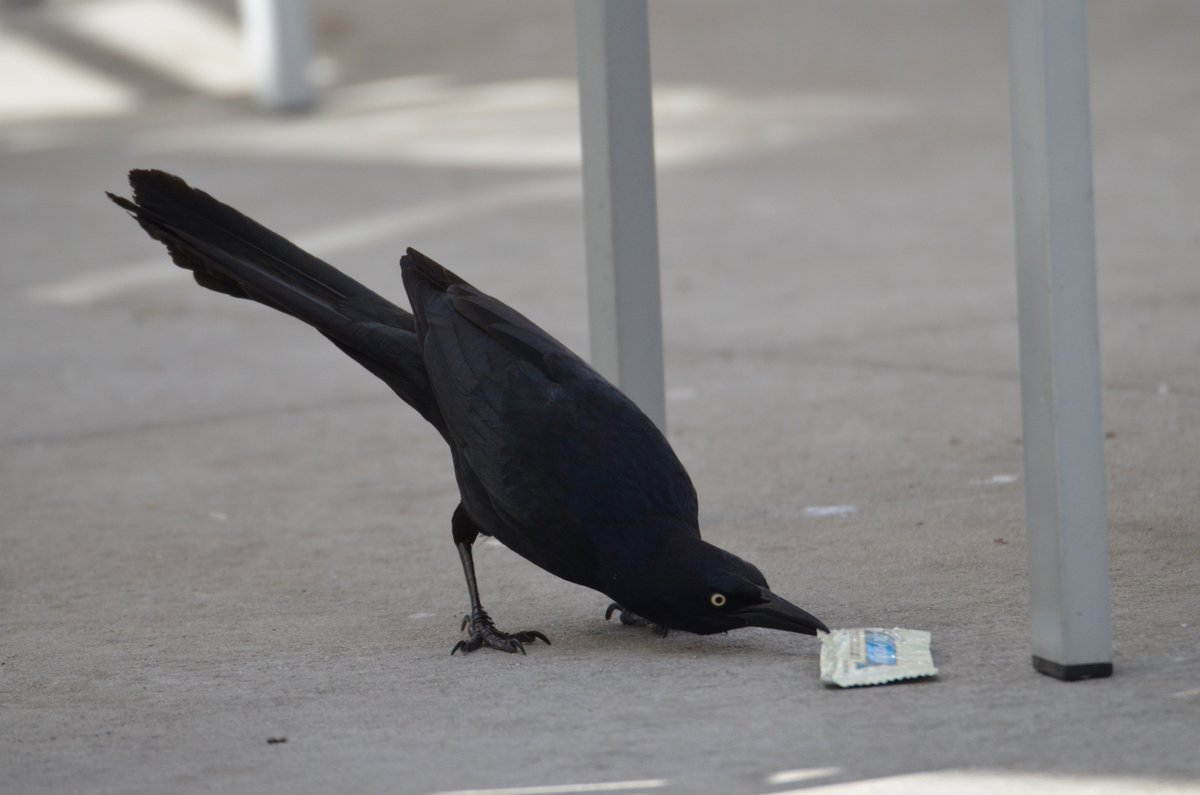
Grackle Research Technician position open - apply by 29 Nov


RECRUITMENT PERIOD
Open date: November 15th, 2017
Next review date: November 29th, 2017
Apply by this date to ensure full consideration by the committee.
Final date: January 31st, 2018
Applications will continue to be accepted until this date, but those received after the review date will only be considered if the position has not yet been filled.

DESCRIPTION

The Institute for Social Behavioral and Economic Research at the University of California, Santa Barbara is recruiting for a Junior Specialist to support the Grackle Project’s long-term research on how behavioral flexibility relates to invasion. The Junior Specialist will help manage a great-tailed grackle cognition field site located in Tempe, Arizona. The successful candidate will trap grackles to color-band as much of the population as possible, conduct focal follows in the wild to document foraging innovations, track nestling success to measure the fitness of tested birds, conduct comparative cognition tests in aviaries and in the wild, supervise student assistants, and contribute to publications that will be published in 100% open access journals at ethical publishers.

This is a two year research project funded by the Max Planck Institute for Evolutionary Anthropology. The position is appointed for one year with the possibility of an additional one year appointment depending on performance.

Duties
Contribute to the implementation of behavioral experiments in accordance with the project’s research goals while making the best use of open research practices.
Trap grackles in the wild and process them (i.e., band, collect blood and process it in the lab, and collect biometric measurements) to individually mark birds for study in the wild and in aviaries and to gather data that we will relate with their cognitive performance. Release most grackles and bring some temporarily into aviaries for behavioral tests. Must be able to conduct this work at irregular hours (e.g., at dawn) to maximize trapping success.
During the non-breeding season, conduct behavioral experiments on grackles in aviaries and in the wild, follow detailed data collection protocols, and enter data daily. Communicate effectively with the postdoctoral scholar, project collaborators, and students who will assist the research. Carry out animal husbandry activities including feeding, cleaning, and health checks to ensure the birds have unlimited and constant access to water and are fed the appropriate food during testing and non-testing times. Identify aviary issues as they arise and work with the Animal Care Team to resolve them.
During the breeding season, fewer experiments will be conducted and more time will be spent collecting behavioral data on wild grackles using focal follow protocols to understand whether they have a dominance hierarchy, obtain their social network, and document which foraging innovations are used by which birds.
Communicate research progress effectively with the postdoc and project collaborators for review purposes.
Promote awareness of research activities in comparative cognition and evolutionary biology among groups that are traditionally underrepresented in science.

Basic Qualifications
BS degree in biology or related field.

Preferred Qualifications
Experience conducting supervised research.
Effective communicator, including proven ability to work cooperatively in a team while also being able to take initiative and work independently, and communicate with the public.
Excellent organizational skills and attention to detail, including proven ability to carry out detailed field protocols and carefully record the data.
Demonstrated ability to work outdoors for long hours in extreme weather (e.g., hot and dry summer) and walk sometimes extensively to follow the birds.
Demonstrate the potential to be a strong role model for groups that are traditionally underrepresented in the sciences.
Experience banding birds, collecting biometrics, collecting behavioral data, or nest searching.
Willingness to learn about and engage in open research practices (e.g., publishing datasets and code, posting preprints, preregistering experiments, advocacy).
Candidate would benefit from this position in terms of their career goals (e.g., it is a longer term tech opportunity, or through gaining experience to pursue a PhD).

The work location is in Tempe, Arizona.

The department is especially interested in candidates who can contribute to the diversity and excellence of the academic community through research, teaching and service.

For primary consideration, submit completed application including cover letter, updated CV, unofficial transcripts and contact information for at least three references by November 29, 2017. The position will remain open until filled.

The University of California is an Equal Opportunity/Affirmative Action Employer and all qualified applicants will receive consideration for employment without regard to race, color, religion, sex, sexual orientation, gender identity, national origin, disability status, protected veteran status, or any other characteristic protected by law.

JOB LOCATION
Tempe, Arizona

REQUIREMENTS

DOCUMENTS
Cover Letter
Curriculum Vitae - Your most recently updated C.V.
Unofficial Transcripts

REFERENCES
3-5 references required (contact information only)
HOW TO APPLY

17 de febrero de 2017

Oferta de master estudiando aves tropicales en Venezuela

M.Sc. in Behavioral Ecology of Tropical Birds. A small number of Biology Graduate Teaching Assistantships and NSF-sponsored Research Assistantships are available to study avian behavioral ecology in the lab of Dr. Karl Berg in the Department of Biology, University of Texas Rio Grande Valley. Successful candidates will be engaged in ongoing research into vocal communication in Green-rumped Parrotlets in Venezuela.

Preference will be given to applicants that harbor a genuine interest to carry out field research in a foreign, Spanish-speaking culture and are willing and capable to be productive in a challenging, hot, humid, buggy, isolated, lowland tropical field site. Field work entails, but may not be limited to checking contents of nest boxes, video-recording nestling behavioral development and adults, mist-netting, banding and re-sighting color-banded adults, blood sampling and vegetation sampling. Lab and course work will take place on the historic, scenic and subtropical Brownsville campus, near the mouth of Rio Grande and Gulf of Mexico and includes: audio-video archival and analysis; sound spectrographic and statistical analysis. Expected outcomes include co-authorship in peer-reviewed scientific papers, presentations and preparation of grant proposals. NSF-sponsored research is a collaborative effort between UTRGV, the University of California at Berkeley, University of California at Davis and the Instituto Venezolano de Investigaciones Cientificas, offering the successful candidate(s) the opportunity to develop professional experience at the national and international level.

Applicants should have a Bachelor’s degree in Biology or related field with a minimum GPA of 3.0; minimum GRE scores of 153 (verbal) and 144 (quantitative); experience or demonstrated interest in studying animal communication and excellent written and oral communication skills.

Qualified individuals who are interested should send an updated CV, unofficial GREs and transcripts, a writing sample and letter of interest to karl.berg@utrgv.edu. Applicants will be reviewed as they are received and preference for Teaching/Research Assistantships will be given to those applicants that can meet admission requirements for Fall 2017 (April 15th). More information can be found at http://www.utrgv.edu...index.htm#item3

6 de julio de 2016

Plazas de master y doctorado en biogeoquímica (Florida, USA)

The Aquatic Biogeochemistry Lab at the University of Central Florida is currently recruiting motivated, energetic graduate students with a strong background in ecology and/or environmental chemistry to fill multiple positions at the M.S. and Ph.D. level. Students who are offered one of these
competitive positions will be supported on NSF-funded Graduate Research Assistantships (includes full tuition and stipend) and will work as part of an interdisciplinary team to assess the ecological impacts of coastal and wetland restoration efforts on biogeochemical processes. Positions are
available now and students will need to begin no later than Fall 2017.

Interested student should visit: https://biology.cos.ucf.edu/abl/ and email
Dr. Lisa Chambers (lisa.chambers@ucf.edu) for more information.

27 de julio de 2015

2 year master thesis scholarship: GIS and Diving (Canada)

M.Sc. Thesis Opportunity: Use of satellite imagery to map seagrass beds in shallow coastal waters across Atlantic Canada

A two year M. Sc. thesis scholarship is available at UNB Fredericton to take part in a research program on seagrass (Zostera marina) across Atlantic Canada. The main activities will involve the development of image processing methods as well as participation over the field season in ground-truth data collection with community groups. The student will be co-supervised by Dr. Brigitte Leblon (UNB), Dr. Armand LaRocque (UNB) and Dr. Marc Skinner (Stantec Consulting Ltd., Dalhousie University). Besides working with Stantec Consulting Ltd., a major international environmental consulting company, the student will work with regional community watershed organizations, as well as universities and government agencies throughout Atlantic Canada.

QUALIFICATIONS
The ideal candidate will have completed their undergraduate degree in biology, geography, or environmental science, be self-motivated, have strong communication skills, and have the ability to manage multiple tasks. Knowledge of optical image processing, geographic information systems (GIS) and/or seagrass ecosystems is an asset. SCUBA diving certification will also be considered an asset, but funding will be available for diving certification for the chosen candidate.

BENEFITS
The work will expose the student to state-of-the-art remote sensing technology and practice. Students involved in the research will work with Stantec Consulting Ltd., with community groups involved in environmental monitoring, with a world renowned expert in seagrass monitoring (Dr. Fred Short, U. New Hampshire, USA), as well as with DFO and Environment Canada scientists. The student will have the opportunity to develop working relationships with these potential future employers. He/she will also be able to get his/her SCUBA diving certification, if not already possessed.

TO APPLY
The position should be filled as soon as possible. Please send your CV, transcripts, list of publications, and reference names as a single pdf file to Dr. Brigitte Leblon (bleblon@unb.ca).

Find your job here